

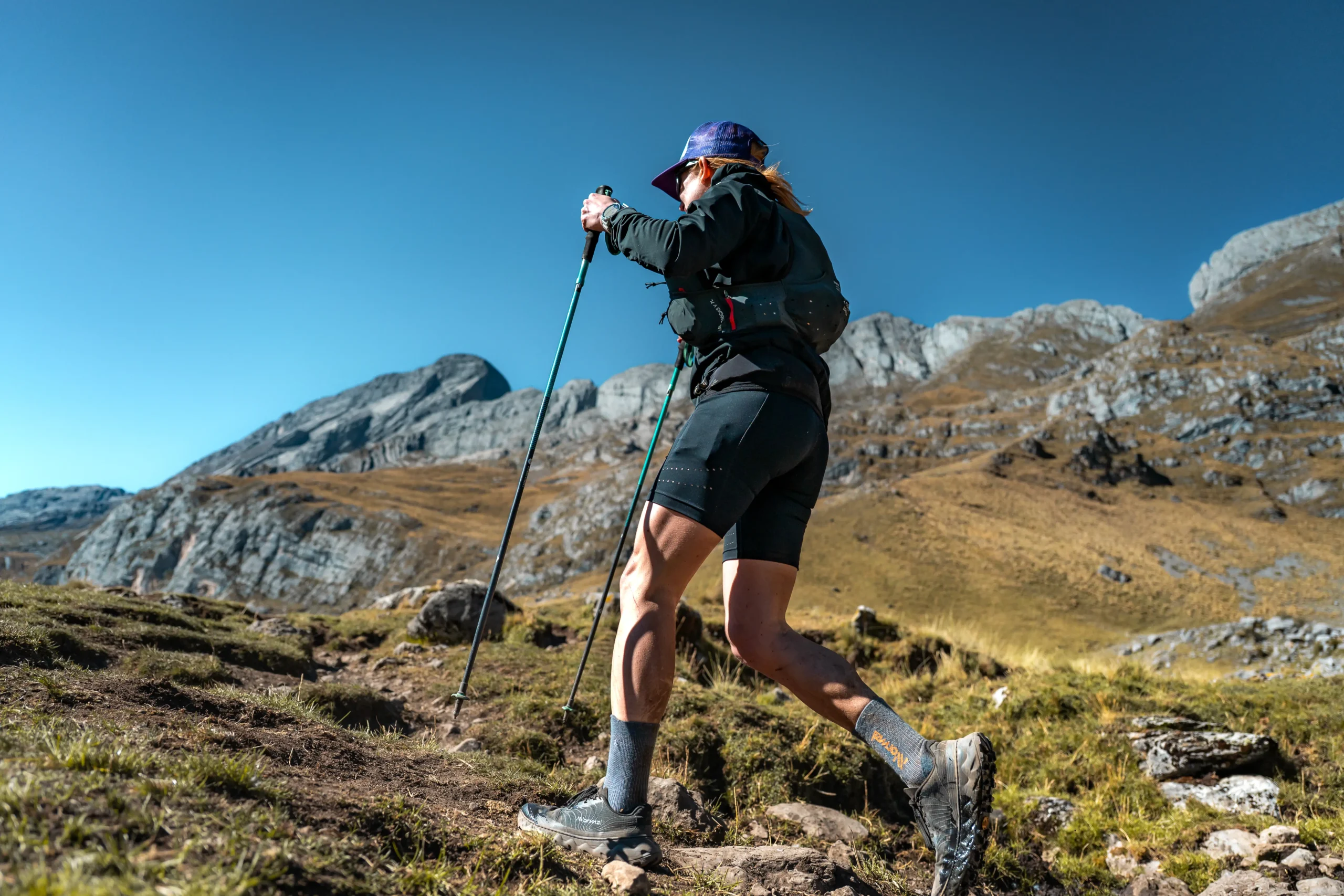
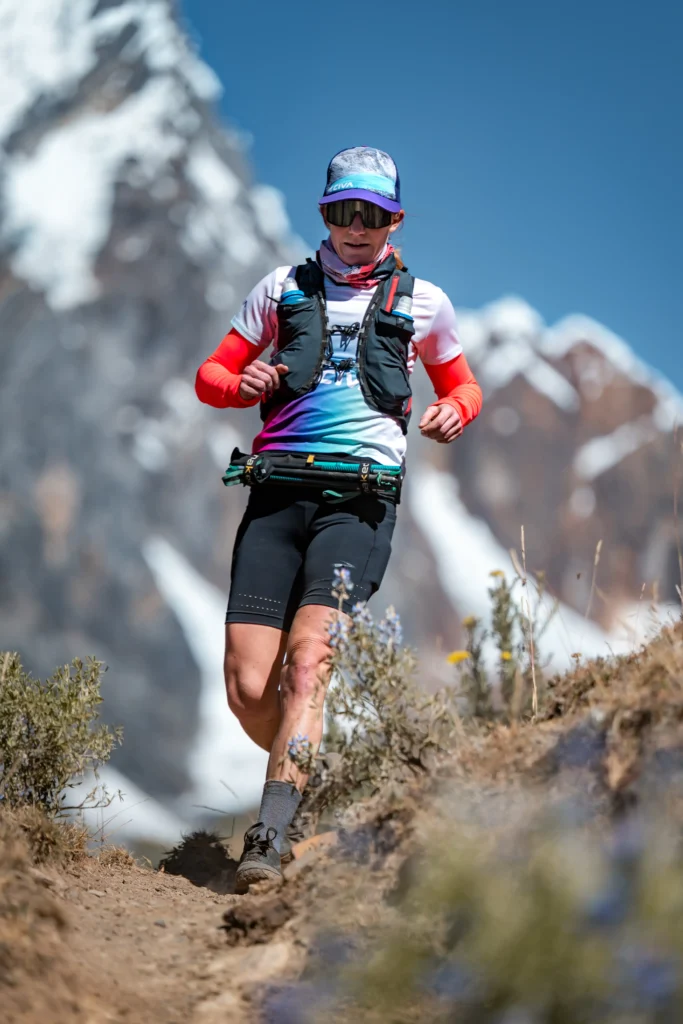
From real high-altitude ultra experience: how to prepare your body to perform where oxygen is limited.
Running at altitude is not just about slowing down. It means facing an environment where every breath is harder, your body is under constant stress, and every decision impacts your performance.
After competing and training in demanding environments — including my non-stop experience in the Huayhuash circuit — I learned that acclimatization is not a minor detail: it determines whether you perform… or simply survive.
What Happens to Your Body at High Altitude?
As you ascend, atmospheric pressure decreases, and with it, the partial pressure of oxygen available for gas exchange in the lungs.
This creates a state of hypoxia (reduced oxygen availability at the tissue level).
In practical terms:
- Heart rate increases
- Breathing rate increases
- Your ability to sustain high intensity decreases
- Fatigue appears earlier
But adaptation also occurs:
- Increased red blood cell production
- Improved efficiency in oxygen utilization
- Metabolic changes that enhance performance at altitude
Common Mistakes Runners Make
- Underestimating altitude
- Arriving right before race day
- Training too hard in the first days
- Ignoring body signals
Real Acclimatization Strategies
- Arrive early
- Ascend progressively
- Control intensity
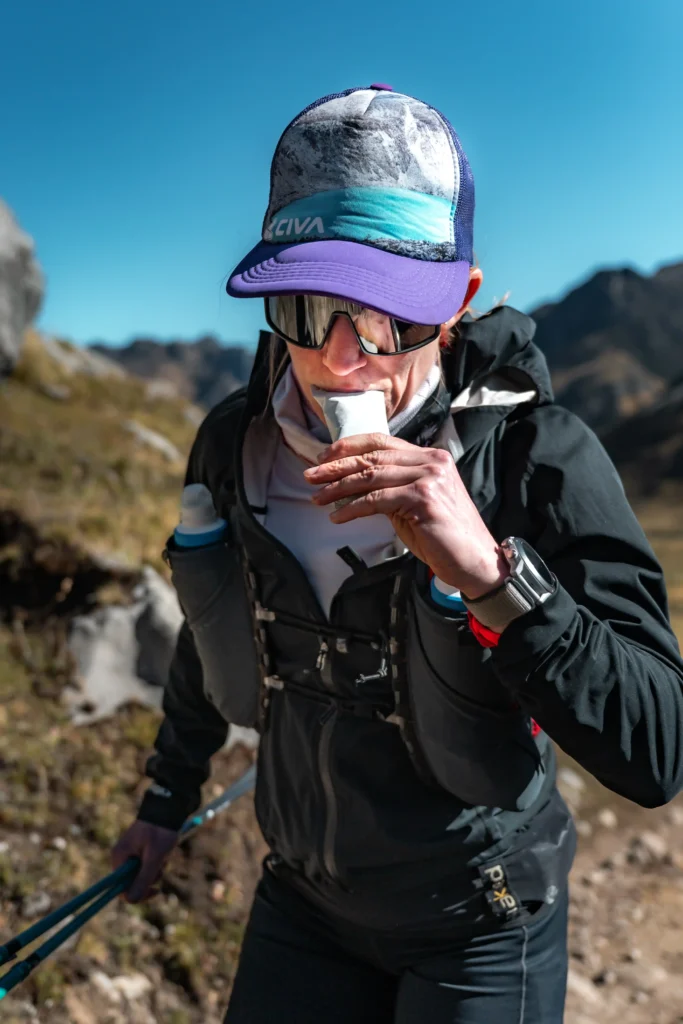
- Stay hydrated and fuel properly
- Prioritize quality sleep
Pero para entender realmente qué ocurre en altura, hay que ir un paso más allá.
Is There Really “Less Oxygen” at Altitude?
Although we often say there is “less oxygen” at altitude, this is not entirely accurate.
The proportion of oxygen in the air remains constant (around 21%), regardless of altitude.
What actually changes is atmospheric pressure, which decreases as you ascend.
This leads to a key consequence:
- The partial pressure of oxygen (PO₂) decreases
- Therefore, less oxygen diffuses from the lungs into the bloodstream
In simple terms for runners:
It’s not that there is less oxygen in the air — it’s that your body has a harder time absorbing and using it.
What Happens at the Alveolar Level
- Oxygen moves from the lungs to the blood through pressure differences
- At altitude, this pressure difference is reduced
- Result: lower oxygen saturation in the blood (SpO₂)
This explains why:
- Ventilation increases (you breathe faster)
- Heart rate rises
- VO₂ max decreases
What If You Can’t Fully Acclimatize?
Adjust your expectations.
Run based on perceived effort, control intensity, and avoid spikes in exertion.
What the Experience Taught Me
The strongest runner doesn’t win — the one who adapts best does.
Quick Checklist for Runners
✔ Arrive early
✔ Adjust expectations
✔ Prioritize hydration
✔ Reduce intensity
✔ Listen to your body
✔ Stay flexible with your pla
“Every meter you gain at altitude is also an opportunity to understand yourself better.
Acclimatization is not just physiology — it is patience, humility, and strategy.
And it is in that balance where true performance happens.”
Marian.
Referencia: West, J.B. – High Altitude Medicine and Physiology.